
Rainwater Harvesting System
A rainwater harvesting system (RWH) is a sustainable technology that captures, diverts, and stores precipitation from surfaces such as rooftops or paved ground for future use. It is widely used to reduce dependency on traditional water sources, lower water bills, and replenish depleting groundwater aquifers. A rainwater harvesting system enhances this approach by using interlocking modular units that allow efficient underground storage or recharge, even in space-constrained environments. These rainwater harvesting solutions can support a sustainable tomorrow.
Definition
Rainwater harvesting is the process of collecting rainwater from rooftops or surface areas and directing it into storage or recharge systems instead of letting it go to waste.
Working
Rainwater is collected through catchment surfaces, conveyed via gutters and pipes, filtered to remove impurities, and then stored in tanks or allowed to recharge groundwater through modular harvesting structures for promoting a safe and sustainable alternative.
……………………………………………………………………………………………………
What Is Rainwater Harvesting?
Rainwater harvesting is the practice of collecting, storing, and using rainwater instead of letting it go to waste. It is one of the oldest and most effective ways to conserve water. In simple terms, rainwater harvesting involves saving rain today for use tomorrow. Rainwater harvesting helps to conserve water efficiently without compromising on water quality and sustainability. Rainwater harvesting system is specially designed for fulfilling your urgent water requirements effectively and efficiently.
You can either store it for later use or replenish groundwater effectively and efficiently.
Importance of Rainwater Harvesting
- Rapid groundwater depletion
- Increasing water demand
- Climate variability
- Urban water stress
Rainwater harvesting directly addresses these water scarcity challenges for fostering sustainable and reliable environmental solutions for a sustainable tomorrow. Innovative harvesting solutions that meet the modern sustainable standards. These sustainable solutions are designed for reusing the water resources effectively.
Benefits of Rainwater Harvesting Explained
Studies show that effective rainwater harvesting can reduce freshwater demand by 30-50% in urban buildings.
Rainwater Harvesting System
A rainwater harvesting system integrates collection, conveyance, filtration, and storage or recharge to manage rainwater efficiently.
Core Components
A typical residential rainwater harvesting system consists of five primary stages:
- Catchment Area:
The surface that receives rainfall directly, most commonly rooftops (RCC, galvanized iron, slate) or paved courtyards. - Conveyance (Gutters & Pipes):
Channels along roof edges and downpipes (PVC or GI) that transport rainwater to storage or recharge areas. - First Flush Diverter:
A mechanism that discards the initial rainfall, which often contains dust, debris, and pollutants. - Filtration:
Filter chambers using sand, gravel, and charcoal to remove suspended solids. - Storage or Recharge:
- Storage Tanks: Above ground or underground tanks made of plastic, concrete, or ferrocement for non-potable activities.
- Recharge Structures: Recharge pits, trenches, or borewell recharge systems that replenish groundwater effectively.
Common System Types
- Rain Barrels:
A simple and cost-effective method where barrels collect rainwater directly from downspouts for gardening. - Dry System:
A setup where collection pipes empty directly into the tank and dry out between rainfall events. - Wet System:
Underground pipes connect multiple downspouts and remain filled until water reaches tank level. - Indirect Gravity System:
Water is pumped to an elevated header tank and distributed through gravity.
Types of Rainwater Harvesting Systems
1. Rooftop Rainwater Harvesting
Rainwater collected from rooftops is filtered and stored or recharged underground for conserving our natural water resources effectively. This is ideally designed for various structures like homes and buildings for a green and sustainable solutions.
2. Surface Runoff Harvesting
Rainwater from roads, parking areas, and open land is collected through pipeline then stored into recharge structures for reusing the water effectively for other activities as well.
3. Modular Rainwater Harvesting Systems
These harvesting systems use modular blocks to create underground storage systems or recharge structures that are:
- Space-efficient
- High load bearing
- Easy to expand
Components of a Rainwater Harvesting System
Essential components of rainwater harvesting systems for effectively collecting and managing the water resources for a green and sustainable future.
- Catchment
- Conveyance
- Filtration
- Storage or recharge units
Modular vs Conventional Systems
|
Feature |
Modular Systems |
Conventional Systems |
|
Space usage |
Highly efficient |
Requires large area |
|
Load bearing |
Very high |
Limited |
|
Scalability |
Easy to expand |
Difficult |
|
Maintenance |
Low |
Moderate to high |
|
Lifespan |
Long |
Moderate |
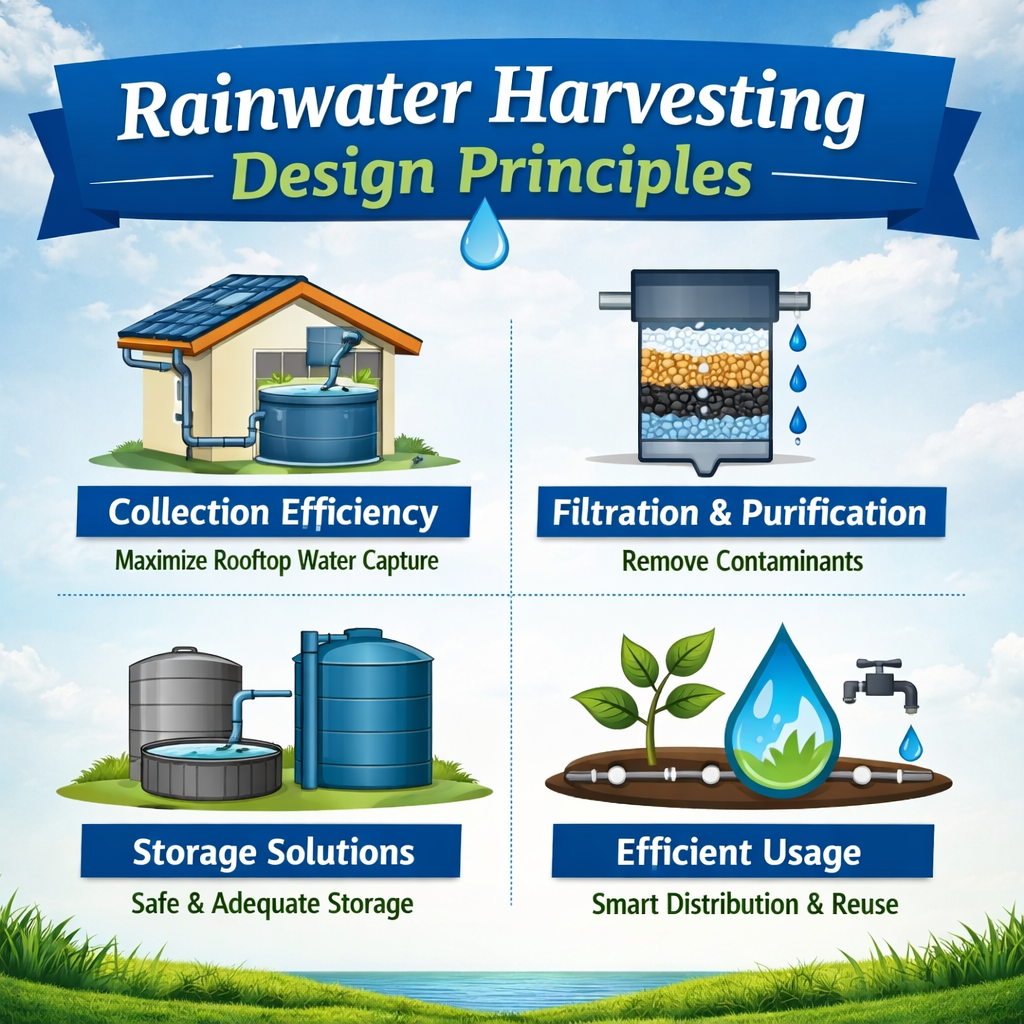
Rainwater Harvesting Design Principles
- Assess rainfall intensity
- Calculate catchment area
- Estimate water demand
- Choose storage or recharge method
How to Install a Rainwater Harvesting System
- Site evaluation
- System design and sizing
- Installation of pipes and filters
- Placement of storage or modular units
- Testing and commissioning
Rainwater Harvesting for Homes
Homes can harvest 20,000–50,000 litres annually, depending on roof size and rainfall.
Rainwater Harvesting for Apartments
Apartments benefit from centralized harvesting systems that reduce dependency on traditional sources like groundwater for promoting a sustainable and green solutions.
Rainwater Harvesting for Commercial Buildings
Commercial buildings use harvested rainwater for various non potable purposes like:
- Landscaping
- Cooling towers
- Flushing
- Cleaning
Underground Rainwater Storage Tank
Underground systems save space and protect stored water from contamination and evaporation which will help to provide you with safe and better water quality. Rainwater tanks can help you to live a sustainable and green living. Recharging the groundwater aquifers at regular intervals can results in sustainable and green environment. Underground rainwater harvesting tanks are easy to maintain, install and conserve water efficiently with the help of advanced and modern features. Regular monitoring of the underground water tanks ensure that the water provided to you is safe. Underground tanks are specially customised for conserving our precious water resources without compromising on quality. Water stored in these tanks will later satisfy your urgent needs for efficiently performing various commercial and industrial activities. These tanks are specially customised so that it can easily fit in the ground and satisfy your urgent water requirements.
Rainwater Harvesting Cost
The price of a rainwater harvesting system in India varies depending on several factors such as the size of the building, roof catchment area, rainfall intensity, system design, type of storage or recharge structure, and level of filtration required. Residential systems are generally simpler and smaller in scale, while apartment complexes and commercial projects require larger, centralized systems with higher storage capacity and more robust infrastructure. Site conditions, underground or above-ground installation, and customization also influence overall pricing. These harvesting systems has less maintenance costs which lowers the overall costs of your harvesting systems. As a result, rainwater harvesting systems are typically made on a project-specific basis to ensure efficiency, compliance with local regulations, and long-term performance.
Rainwater Harvesting Installation Cost in India
Installation typically accounts for 20–30% of total system cost.
Maintenance of Rainwater Harvesting System
- Cleaning filters every 3–6 months
- Pipe inspection and gutters
- Removing debris from catchment areas
Rainwater Harvesting ROI
Most systems recover costs within 2- 4 years through water savings and reduced tanker usage.
Rainwater Harvesting Laws in India
Several states mandate rainwater harvesting for:
- New buildings
- Large plots
- Commercial developments
Government Rules for Rainwater Harvesting
Local municipal by-laws specify system design, capacity, and compliance requirements for meeting the safety standards of the collected water. These local laws can monitor the quality for every rainwater harvesting systems.
Rainwater Harvesting and Water Conservation
Harvesting rainwater reduces dependency on groundwater aquifers and surface water sources which will give adequate time for natural water resources to replenish efficiently and leads to a green and sustainable living. Collected water is reused and managed effectively for a greener environment.
Sustainable Water Management Solutions
Rainwater harvesting supports:
- Circular water use
- Reduced urban flooding
- Climate resilience
Green Building Water Systems
Green building certifications encourage rainwater harvesting as a core sustainability feature for fostering a clean and greener tomorrow.
Rainwater Harvesting Disadvantages
- Poor maintenance can reduce efficiency
- Initial setup cost
- Space constraints in dense areas
Common Rainwater Harvesting Problems
- Clogged filters
- Overflow issues
- Improper sizing
Rainwater Contamination Issues
Contamination may occur due to dust, bird droppings, or pollutants due to this your water quality can be deteriorated.
How to Filter Harvested Rainwater
- First-flush diverters
- Sand and carbon filters
- UV or membrane filtration (for reuse)
Rainwater Harvesting Maintenance Issues
Regular inspection and cleaning prevent most problems.
A rainwater harvesting system is no longer an optional add-on it is a future-ready necessity. From reducing water bills and preventing floods to supporting sustainable urban growth, rainwater harvesting delivers measurable environmental and economic benefits. These systems are seamlessly integrated tanks which will perfectly suits the sustainable environmental activities for long-term water savings. To raise a reliable and authentic sustainable living solutions, it’s essential for you to get a modular rainwater harvesting system which will affectively meet your urgent water needs. These sustainable tanks are used for both potable and non-potable water activities efficiently. Modular tanks are durable, easy to install and reduce maintenance cost for fostering sustainable and reliable water solutions. With proper design, installation, and maintenance, it becomes a long-term asset for homes, businesses, and cities alike.
FAQs
- What are the main components of a rainwater harvesting system?
The main components include the catchment area (roof or paved surface), conveyance system (gutters and downpipes), first-flush diverter, filtration unit, and storage or recharge structures which will promote a sustainable way of conserving the water at various sectors lie homes, industries and commercial spaces. - Does rainwater harvesting help in groundwater recharge?
Yes, rainwater harvesting allows excess rainwater to percolate into the ground through recharge pits, trenches, or borewells, helping recharging groundwater effectively for satisfying urgent water needs. - Can a rainwater harvesting system be customized for different building sizes?
Yes, rainwater harvesting systems can be designed and scaled according to the size, water demand, and usage pattern of homes, apartments, commercial buildings, and industrial facilities in a sustainable solution. - Do I need government approval to install a rainwater harvesting system?
In most cases, government approval is not required for installation, but the system must comply with local municipal by-laws and building regulations for meeting the legal and safety requirements of these rainwater harvesting systems. - How often should a rainwater harvesting system be cleaned?
Basic maintenance such as cleaning gutters and filters should be done every 3–6 months, with inspections before and after the monsoon season. - Are there government subsidies for rainwater harvesting systems in India?
Some state governments and local authorities offer incentives, rebates, or subsidies for installing rainwater harvesting systems, depending on regional policies. - Does a rainwater harvesting system help reduce flooding in cities?
Yes, by capturing and storing rainwater at the source, rainwater harvesting reduces surface runoff and pressure on stormwater drains, reduces the risk of urban flooding. The extra water is stored in these systems so that it can be used for other purposes. - How does a rainwater harvesting system work?
The system collects rainwater from catchment surfaces, filters out debris and contaminants, and stores the water or directs it into recharge structures for recharging the groundwater on the regular basis which results in promoting a sustainable and greener tomorrow. - Can collected rainwater be used for toilets, gardening, and irrigation?
Yes, harvested rainwater is commonly used for non-potable activities such as toilet flushing, gardening, landscaping, and irrigation for meeting your urgent water requirements efficiently at industries, homes and commercial. - Is rainwater harvesting compulsory in India?
Rainwater harvesting is necessary in many Indian states and cities for certain building categories, especially new constructions and large developments, as per local regulations and safety standards for a reliable and authentic sustainable solutions.
Testimonials
Our customer reviews are
the reflection of our efforts,
commitment and dedication.

We have used RAINMAXX® Modular Tanks for Rainwater Harvesting. It has multiple advantages over the conventional RCC tanks. RAINMAXX® tanks are very efficient and has significant impact on the ground water recharge.
- Client : SIEMENS
- PMC : CBRE, Mr. Ansari
- Location : Noida

The modular tanks by RETAS works perfectly for storm water applications and requires negligible maintenance. It saves cost and time. We have used these tanks in our various projects such as PARLIAMENT HOUSE ANNEXE, Western Court and PGI Hospital, Chandigarh.
- Client : CPWD, New Delhi
- Contractor : Globe Civil Projects Private Limited, Mr. Nipun Khurana, MD.

The solutions provided by RETAS for managing the water logging issues has helped us reduce water wastage drastically. We highly recommend their services and wish them luck for the future.
- Client : NHAI, Mr. Rachit Kumar
Google review
Hear out what our customers
have to say about our
services.